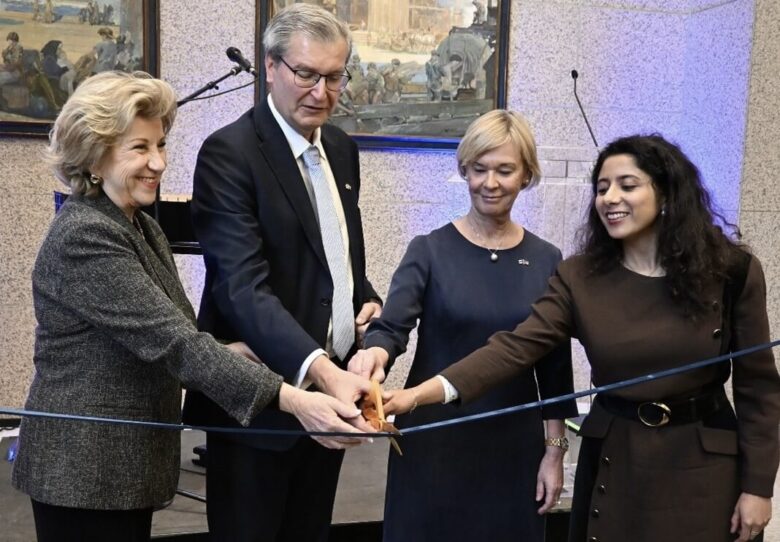
Finland has opened a new consulate in Houston, expanding its diplomatic and trade presence in Texas as U.S.–Finland relations deepen across key sectors including maritime technology, space, and defense. The Houston consulate—Finland’s third in the United States—positions the Nordic country at the center of one of America’s fastest-growing economic regions.
When the Finnish government decided to open a third consulate in the U.S., Houston was the clear choice.
The Nordic country, which already has more than 30 honorary consulates through the country, including one in nearby Dallas, as well as its embassy in Washington and consulates in Los Angeles and New York, tasked their former Consulate General in Los Angeles with establishing the new office in the Texan city that is increasingly becoming a strategic center.
The consulate officially opened on December 15, timed to coincide with the rollout of Finland’s new F-35 fighter jets—an event that underscored the deepening defense relationship between Finland and the United States. It was just the latest trade in a strategic partnership defined less by scale than by precision, concentrated in sectors where Finland’s niche expertise provides a highly specialized role.
Nowhere is that clearer than in space. Finland has quietly built a reputation in small satellite technology and radar-based Earth observation, while Houston—anchored by NASA’s Johnson Space Center—remains synonymous with the architecture of the American space program.
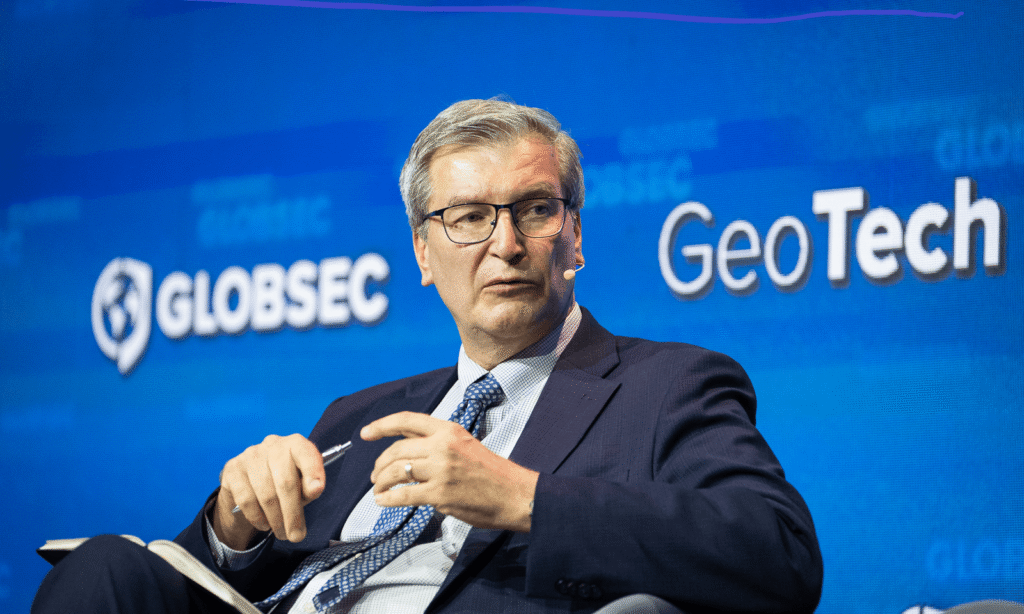
Following a chance encounter at the recent GlobeSec US-Europe Forum in Washington, we spoke with the man tasked with opening the new consulate and leading the effort to deepen bilateral relationships in the region. In an exclusive interview, Finnish Ambassador Stefan Lindström, Houston’s new consulate general, shared his views on entrepreneurship, Southern hospitality, and his favorite Finnish diplomatic property.
The interview has been formatted for clarity and length.
Diplomatica: In addition to its embassy in Washington, Finland has more than thirty consulates general throughout the country, and two consulate – one in Los Angeles and one in New York. When deciding on a third consulate, why Houston and not Seattle, San Francisco, or other diplomatic hubs?
Lindström: That’s a very easy answer – trade, trade, trade, trade.
Really, when you look at everything that’s going on right now, Texas is the fastest growing state in the U.S. And there’s so many reasons why we should be here right now. And everything’s to be offered, you know, after my first month here. And it’s making business in Texas. There’s just second to none in the U.S. right now. So many businesses are moving here from California and other areas. The price of talent, the cost of talent and access to talent is of course, very important.
But really just the ease of doing business here. You meet people really high up here in Texas. And then the first thing they ask you, when you tell then you are opening a consulate here is, how can we help you? How can I help you in that? Where do you get that anywhere else? This Southern hospitality people talk about—it’s not a myth. People really want you to succeed.
Diplomatica: Does this differ from your experience at the consulate in Los Angeles?
Lindström: Well, it’s the same but different. Some things are very similar.Of course, in Texas and in California, talent is everything. And the dynamics of the economy is just mind-blowing. But I’ve told many people, actually, that coming to Texas right now is like going to L.A. 10 years ago. Pretty much the same experience.
Diplomatica: The Los Angeles consulate was already established when you were there. And obviously we have a prominent embassy here in Washington, and more than 30 honorary consulates across the U.S. What’s it like to set up a new consulate from the beginning and be responsible for defining the purpose and the direction?
Lindström: The whole idea is, of course, how can we create new relationships? But you know that the U.S. and Finland complement each other in a very special way right now. The U.S. is buying icebreakers from Finland. We are on the forefront of quantum and quantum computing.
When you look at space, Finland has some of the leading small satellite capabilities in the world. When you look at critical infrastructure, again, there isn’t always the scale of funding, but Finnish technology is there. When you look at the whole maritime sector, it’s not only the icebreakers, but the entire maritime ecosystem— whether you’re talking about port operations, cargo handling, or related equipment. Again, there is strong global demand for Finnish equipment, which is quite unique. And connectivity is key.
Houston is also home to Texas Medical Center, the largest medical research center in the world. We’re building a program with them. We’re going to do something with NASA called NASA Hodge, where high schools and universities cooperate with NASA. So, a lot of things that wouldn’t happen if we wouldn’t be here ourselves. These things materialize.
There’s so many things that we can talk about right now that I never thought about really in the same way as before. That’s why I coined the slogan for the consulate here, ‘Houston, we have a solution.’
Diplomatica: You mentioned very large, leading industries but let’s talk small for a moment. Finland has a very strong entrepreneurial culture, as does Texas. Finland has been promoting its 90 Day Finn program to recruit small businesses, and of course you mentioned many businesses leaving California for Texas. Is there an entrepreneurial overlap between the work that you’re doing in Houston and the ecosystem of entrepreneurship in Finland?
Lindström: I think Finland’s future lies in the entrepreneurial spirit that we do have.
You can’t build a future with the old industries, like the paper industry, heavy metal industry, heavy machinery and all this stuff. The future has to come from new innovation, from critical emerging technologies and the possibility to move fast, really.
And that’s another thing that we try to work on here as well. As a small country, we are not always that good at getting the capital that we should and then being able to use it. So bringing in companies, showing them what’s here, showing them to investors and investors, all of this comes from a future form.
Diplomatica: What is your perception of what Americans know about Finland overall?
Lindström (with a laugh): Too little. You hear surprising things from many different people, or that it’s cold or whatever.But then you meet people who know so much about Finland that you’re wondering, how do you know these things? Like Simo Häyhä. You would be surprised how many people know about Simo Häyhä.
Diplomatica: Who is Simo Häyhä?
Lindström: He was a legendary Finnish military sniper. You would be surprised how many people know about Simo Häyhä, and I have absolutely no idea why. Somebody has been planting out that history somewhere. Maybe it’s just social media. But I’ll go somewhere in the U.S. and say, yeah, I’m from Finland. And someone will say, oh, Simo Häyhä. I saw a YouTube documentary about him.
Diplomatica: Well, that brings me to my next question. What do you wish people knew about Finland? Diplomatica’s readership is fairly global but there are more than 175 embassies in Washington and nearly 90 consulates in Houston. There are many international conversations happening all the time. What message would you give to folks about what they should know about Finland?
Lindström: One thing is also that I point out to many of my American friends is the work-life balance. That you don’t have to really work your butt off every single day. It’s tough to be able to succeed here and still have a balance. And in Finland, we have the happiest country in the world. I think it’s the proximity to nature, the appreciation for nature that is quite different.
Diplomatica: For our last question, I’m going to put you on the spot a bit. Diplomatica reports at the intersection of diplomacy and the built environment. If you had to pick one, what is your favorite Finnish diplomatic property in the world?
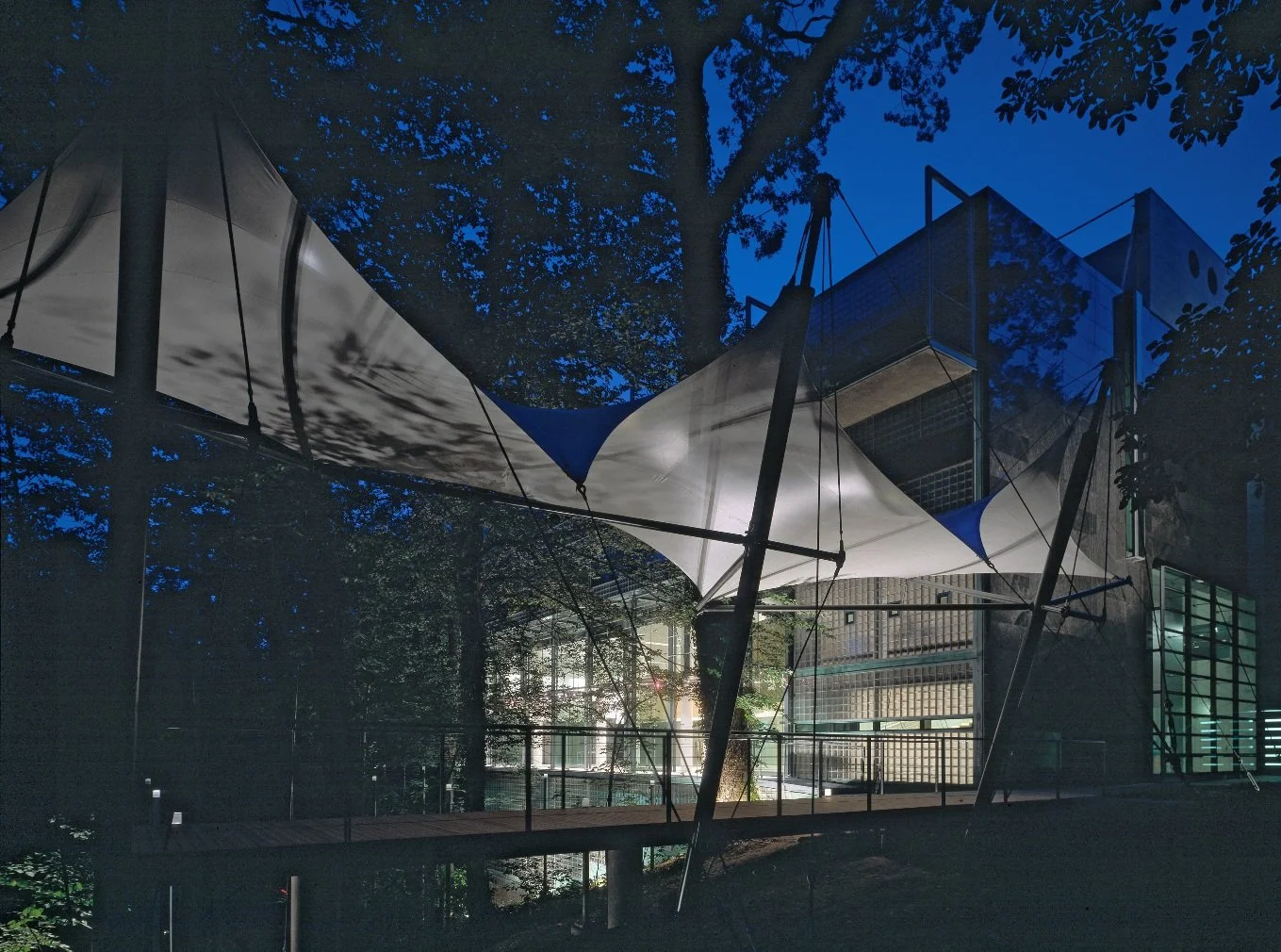
Lindström: The embassy in Washington. Well, the functionality is absolutely the best in the world.Yeah, we have the platinum, lead platinum. (23:06) So everything that was done when they built the embassy was done in a very, it was done the right way. (23:11) This is exactly the way it’s supposed to be.
But another embassy is the Finnish embassy in New Delhi. A lot to diplomacy is about differentiating yourself. And that building really sets a mark in Finland. Just Google it and you can see how amazing the whole building, everything that’s been done. And it’s also, the architects are some of the more famous ones in Finland. And they really thought about things before they designed it. It’s stunning.

Editor’s note: The author is a member of the Embassy of Finland’s Diplomatic Sauna Society.