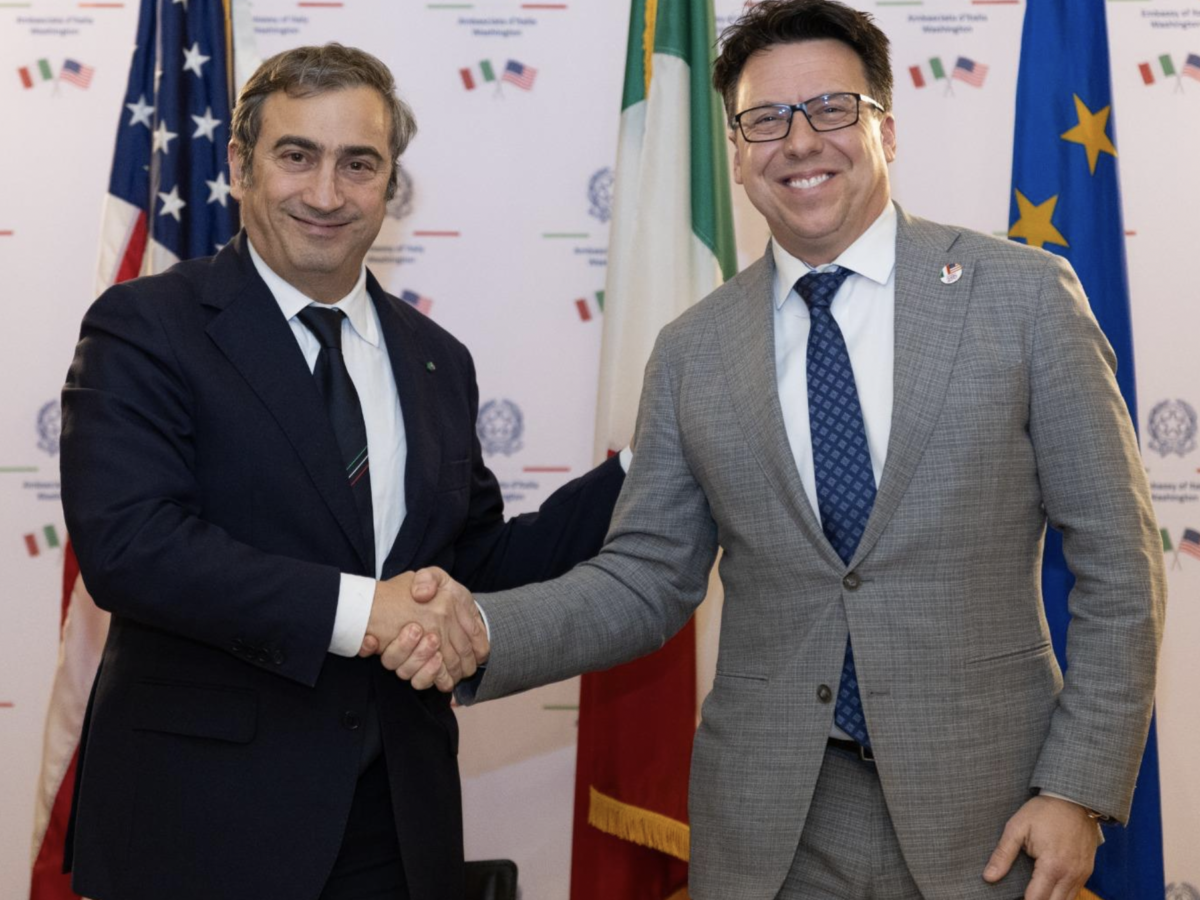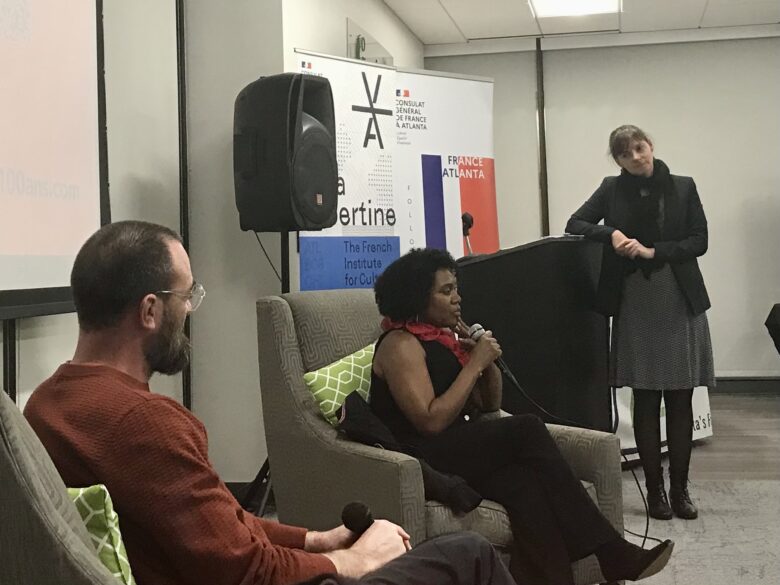
As part of this year’s Atlanta Francophonie Festival, Alliance Française d’Atlanta, in partnership with Villa Albertine, hosted a screening of the documentary Claude McKay, Wanderings of a Rebellious Poet on March 16 at its Peachtree Street location. The film was presented in French with English subtitles, and was followed by a public discussion with the filmmaker.
A central figure of the Harlem Renaissance, the Jamaican-born vagabond poet, Claude McKay, rose to prominence with his anti-lynching sonnet If We Must Die, a work that continues to resonate in contemporary movements for racial justice. His broader body of work—including novels such as Banjo and Romance in Marseille—emerged from years spent moving through working-class and intellectual communities across Europe and North Africa, where he confronted questions of race, labor, and political radicalism.
Directed by Matthieu Verdeil, the 52-minute documentary presents McKay as both a literary force and a profoundly transnational figure whose life unfolded across Harlem, Paris, Marseille, Soviet Russia, and Morocco during the politically charged decades of the early twentieth century.
The filmmakers’ portrayal of archival Marseille, revolutionary Russia, and colonial Morocco underscores how McKay’s travels informed his critique of “home” as both a physical and political construct, situating him within a broader global context of artistic exchange and political ferment. Drawing on rare archival footage and narrated through McKay’s own words, the film traces the formation of a transatlantic Black consciousness that would later influence writers such as Aimé Césaire and James Baldwin.
The Francophonie event gathered members of Atlanta’s international, academic, and cultural communities for an evening that blended artistic remembrance with contemporary dialogue. Following the screening, Verdeil was joined by Dr. Stéphane Dunn of Morehouse College for a discussion highlighting McKay’s enduring relevance to contemporary debates on migration, belonging, and representation.
By presenting McKay’s life through the lens of shared histories and cultural interconnectedness, the program positioned the writer not only within the Harlem Renaissance, but within a wider network of global intellectual and political movements spanning the United States, Europe, and North Africa.