Maria Callas was not just an opera star; she was a theatrical force who changed what audiences expected from an opera singer. Possessing a voice of remarkable range, color, and dramatic intensity, Callas revived forgotten bel canto operas and reshaped familiar roles like Norma, Tosca, and Lucia di Lammermoor. What set her apart was not technical perfection alone, but her fearless emotional commitment. She sang with meaning—every phrase shaped by character and intention—making even the smallest musical moment feel urgent and alive.
Equally important was Callas’s power as an actress on stage. At a time when opera singers were often judged primarily on vocal beauty, she brought a physical and psychological realism that felt revolutionary. Her movements, expressions, and stillness were all part of the storytelling, drawing audiences into the inner lives of her characters. Callas didn’t simply perform roles; she inhabited them, blurring the line between singing and acting and proving that opera could be as dramatically compelling as spoken theater. Her legacy endures not only in recordings, but in the modern expectation that great opera demands great acting as well as great singing.
The costume designers who dressed Callas played a significant part in supporting her dramatic appearances on stage by creating costumes worthy of her diva status. Six of those original opera costumes created just for her at La Scala in Milan are on exhibit now in Washington through a collaboration with the Italian Cultural Institute of Washington, the Luther W. Brady Art Gallery and the Embassy of Greece, with the contribution of Fondazione Teatro Alla Scala and Fondazione Zeffirelli Onlus.
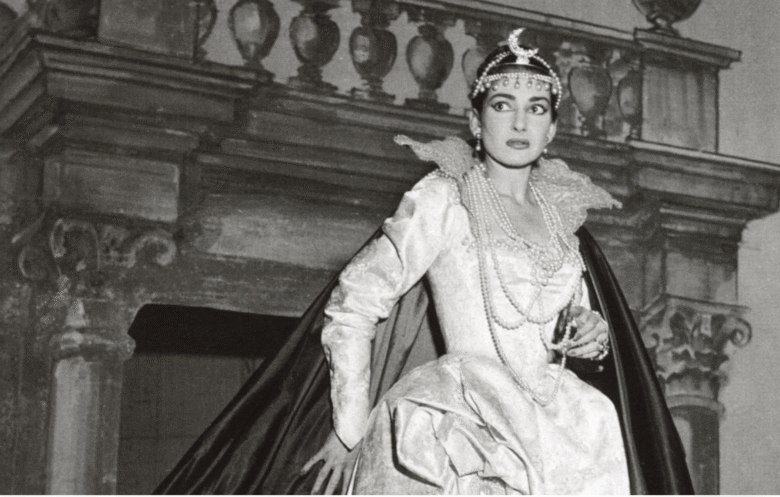
Showcasing Callas in four iconic roles, the exhibit at the Brady Art Gallery includes costume sketches by Nicolas Benois and Piero Tosi, along with rare photographs of Callas. The notes accompanying the exhibition explain that costume details, such as jewels, headdresses or rich color are frequently used to signal the performer’s role or status in the performance. Franco Zeffirelli who designed the set and costumes for “Il Turco in Italia” added a touch of glamour to Callas’s costumes in her leading role as Fiorella. The gown and apron worn by Callas are accessorized gemstones to distinguish her status on stage.
However, Zeffirelli didn’t just sew gemstones on costumes. In fact, he carefully researched the clothing of the period to ensure that the costumes historically accurate. Another costume which he designed for Callas evokes the early Empire style of 1810 when the opera was first written as seen in the Neapolitan gouaches produced during that period as souvenirs for tourists. The dress that Callas wore in Act 1, scene 5 of “it Turco in Tialia” is a spectacular empire silhouette gown with red velvet bodice and matching trims intended to convey wealth and clss.. The skirt of the costume is made of the same silk as was found on the interior walls and ceilings of the once private boxes at La Scala.
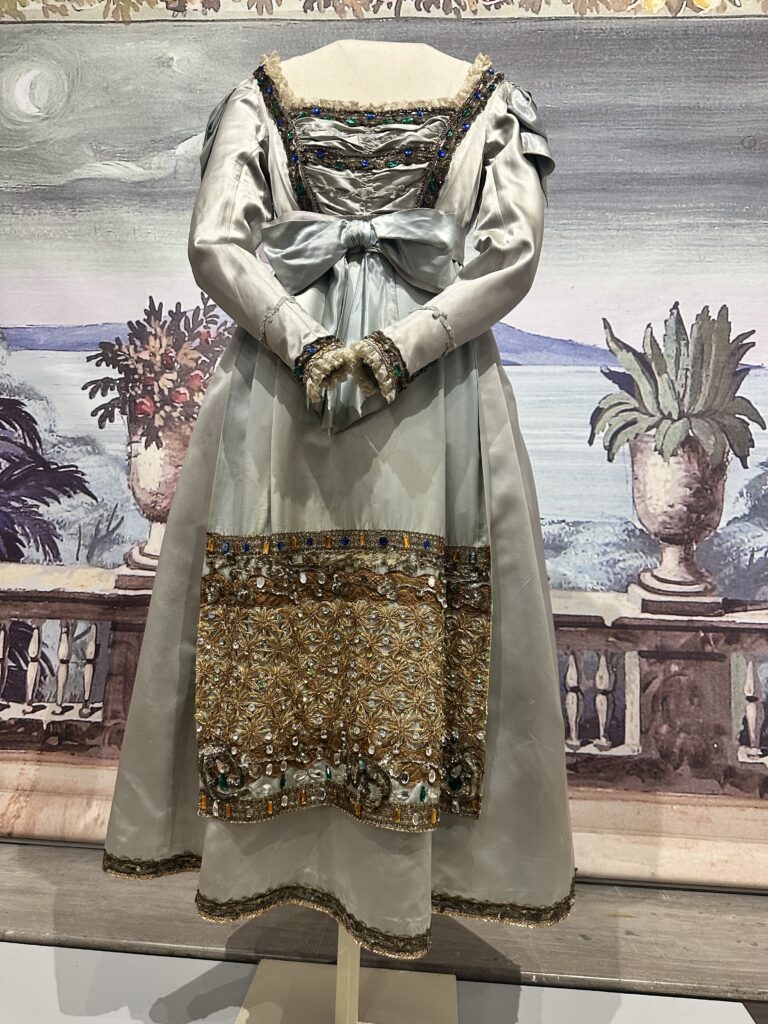
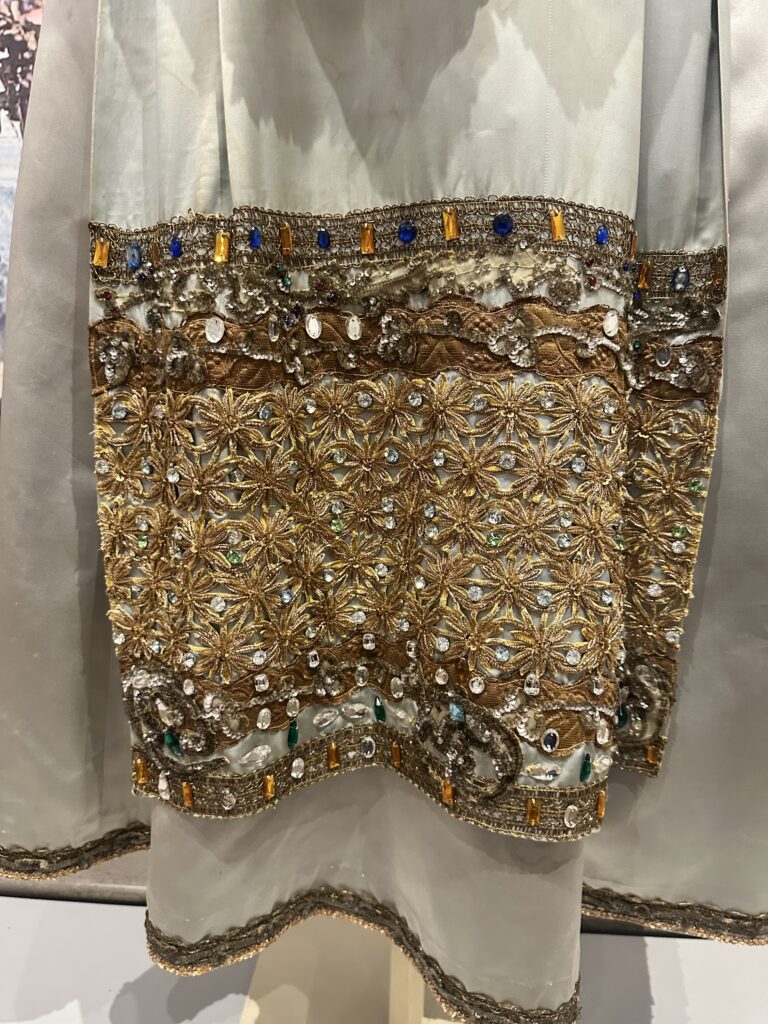
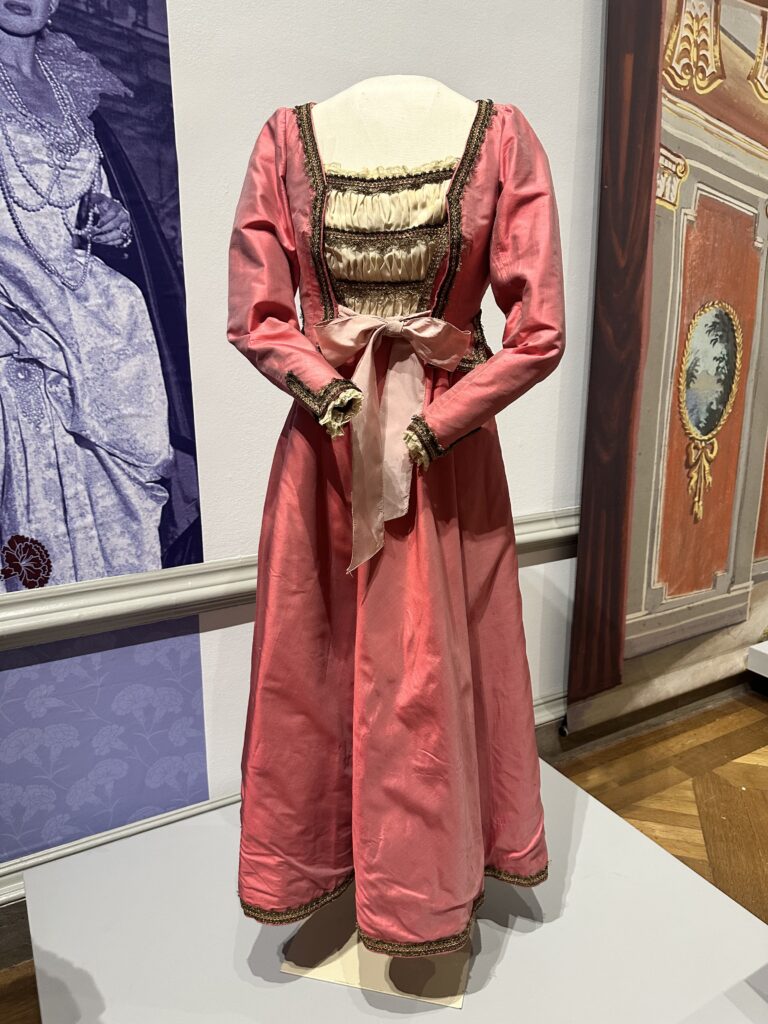


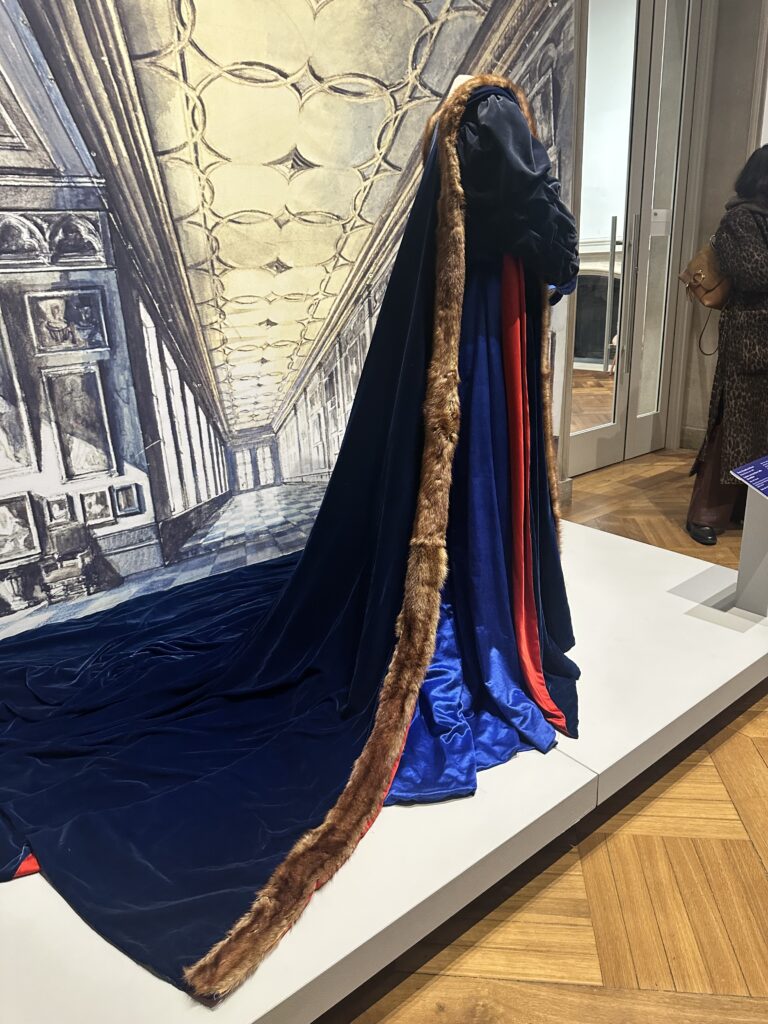


Benois went in a completely different direction in designing the costumes for “Ifigenia in Tauride.” Expecting to star in a Greek tragedy, Callas was surprised to discover the glamorous 18th century-styled costumes meant to remind the audience of a fresco by Tiepolo. Callas as Ifigenia must have been memorable in the elaborate blue silk brocade dress with pearl jewelry and a red cloak. The crowd favorite last week was definitely the blue velvet dress trimmed in fur and glass beads that Callas wore in her role as the tragic queen in “Anna Boleyn.” Benoit based his costume designs for this opera on portraits of the Tudors by Hans Holbein the Younger. The deep blues, the long train, the furs and beads all drew attention to Callas herself, queen of La Scala!
The exhibit will be on display at the gallery until March 21. The Luther W. Brady Art Gallery is free and open to the public Wednesday – Saturday, 1:00-5:00 pm. (Closed on US Holidays and during GW School Breaks.)